
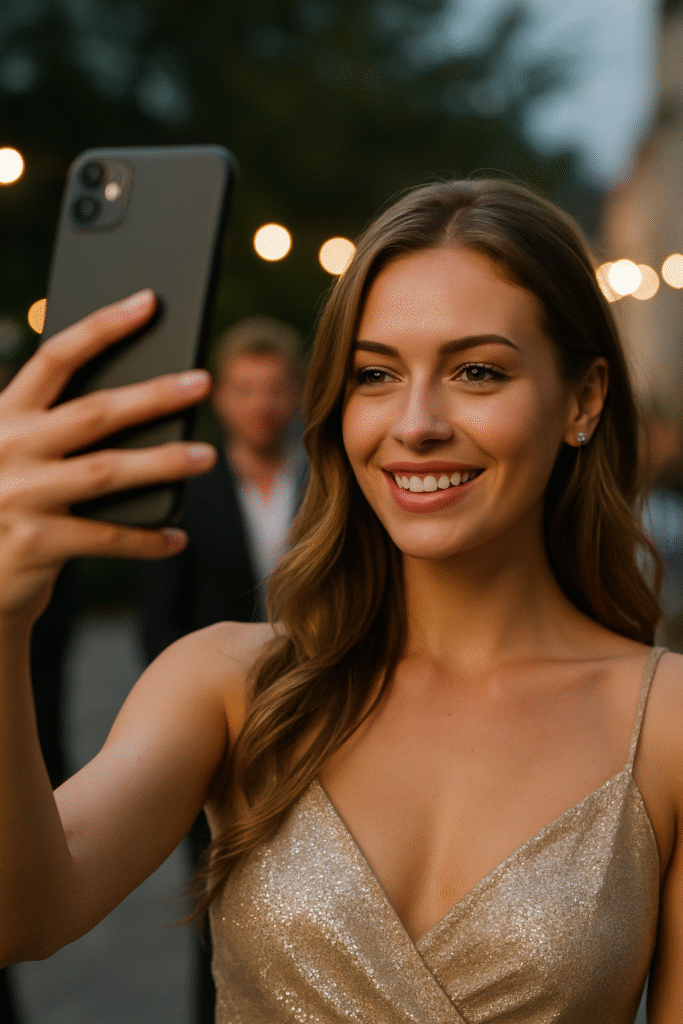
Who is actually allowed to publish a photo in which I can be seen? The Right to your own image is a central part of personal rights. It protects every person from distributing photos or videos without their consent – whether on social media, in the press or on advertising space.
The case: a selfie at an influencer party
A creator attends a launch party of a cosmetics label. At the event, she takes a selfie with a well-known singer in the background – she happens to be in the picture, but clearly recognizable. The creator posts the photo on Instagram, adding tags and a campaign marker.
The reaction: demand for extinguishing from the management
A short time later, the singer’s management asked the creator to delete the picture – without prior consent, the publication was illegal. You refer to that General Rights of Personality And the right to your own image.
Legal situation: Publication only with consent
According to § 22 KUG (Kunstaudergesetz), portraits may only be published with the consent of the person depicted. Exceptions apply i.a. for people of contemporary history or in recordings from the field of contemporary history – But only if no legitimate interests are violated. The prominent singer was not specifically part of the recording and was neither asked nor presented in agreement.
Solution: Subsequent consent or image processing
In order to be legally on the safe side, the creator should have asked for permission before publication. Alternatively: pixelate or cut out the singer. A Model release This is especially useful for professional campaigns.

Do you need legal advice on the right to your own image?
Frequently asked questions
Can I post photos of events where others can be seen?
At meetings and public events, persons without consent may be shown when they appear as part of the quantity. If a single person is clearly the focus, your consent is usually required.
What can I do if someone posts a photo of me without permission?
You can request deletion and omission, for commercial use also a fictitious license fee as compensation. First, save screenshots with date and URL.
Once you have given consent, apply forever?
Not necessarily. Consent can be revoked for good cause, for example if the circumstances have changed significantly. In the case of advertising recordings, the duration of use should be contractually regulated.
Further information: Personal rights · Protection of Personal Rights